0MY CART
 0
Wheel Offset & Backspacing Explained (With Charts)
June 4, 2026
Wheel Offset and Backspacing Explained
Updated June 2026 · Originally published Aug 2021Wheel offset is the distance, in millimeters, from a wheel's mounting face to its true centerline. Positive offset pushes the wheel inward toward the suspension for a tucked look. Negative offset pushes it outward for poke and stance. Backspacing measures the same idea from the wheel's back lip instead of its centerline. Get offset right and the wheel clears everything. Get it wrong and it rubs, no matter what the diameter says.
Offset is the most misunderstood number in wheels, and the most expensive one to get wrong. Two wheels with identical diameters and widths can sit two inches apart on your truck because of it. One tucks clean, the other chews through a fender liner by Friday. This guide covers what the numbers mean, how to convert between offset and backspacing, how much change your vehicle can take, and the honest trade-offs nobody puts on the box.
What's In This Guide
- Reading a Wheel Size
- Offset, Visualized
- Backspacing & the Formula
- Conversion Chart
- A Worked Example
- How Much Change Is Safe
- The Honest Trade-Offs
- Poke, Flush & Tuck
- FAQ
First: How to Read a Wheel Size
Every wheel listing follows the same pattern. Take 20x10 -18:
| Number | What It Means | In This Example |
|---|---|---|
| First (20) | Diameter in inches | A 20 inch wheel |
| Second (10) | Width in inches | 10 inches wide |
| Third (-18) | Offset in millimeters | Mounting face sits 18mm inboard of center |
Yes, the industry really does mix inches and millimeters in one number. Nobody said this hobby was logical. The third number is the one this whole page is about.
Offset, Visualized
Picture the wheel in cross-section, looking at it from the front of the truck. The mounting face is the flat pad that bolts to your hub. Offset is simply where that pad sits relative to the exact middle of the wheel:
Positive offset means the mounting pad sits closer to the street side of the wheel, which pulls the whole wheel in toward the suspension. Most factory wheels are positive, usually +20 to +45, because manufacturers tuck everything in for clearance and ride comfort.
Negative offset means the pad sits closer to the brake side, which shoves the wheel outboard. This is where deep lips, concave faces, and poke come from. The truck world lives here, with popular fitments running everywhere from -12 to -76.
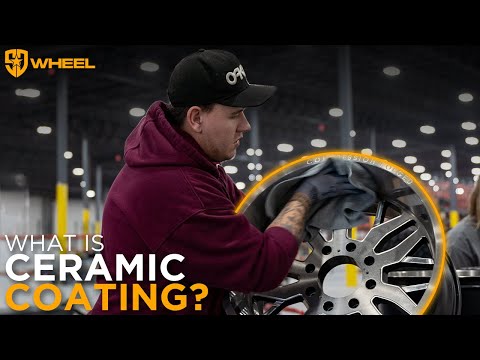
Prefer to watch? Our team walks through offset on real wheels in about three minutes.
Backspacing and the Formula That Connects Them
Backspacing answers the same question from a different starting line. Instead of measuring from the wheel's centerline, it measures from the back lip of the wheel to the mounting pad, in inches. Old-school truck and 4x4 catalogs used backspacing before offset took over, and you'll still see it on lift-kit instructions and older forums.
The two numbers describe the same wheel, so you can always convert between them:
The “+1” accounts for the wheel's flanges, since advertised width is measured between the bead seats, not the outer edges. Divide the offset by 25.4 to turn millimeters into inches. That's the whole trick.
Offset to Backspacing Conversion Chart
Here's the formula pre-run for the fitments that show up most in our guides and gallery:
| Wheel Size | Offset | Backspacing | Where You See It |
|---|---|---|---|
| 20x9 | +27 | 6.06″ | Factory Silverado 20s |
| 20x9 | +20 | 5.79″ | Stock-height truck upgrades |
| 20x9 | 0 | 5.00″ | Leveled daily drivers |
| 18x9 | -12 | 4.53″ | Lifted small-wheel-big-tire builds |
| 20x10 | -18 | 4.79″ | 3″ lift daily setups |
| 20x10 | -24 | 4.56″ | 4–6″ lift daily setups |
| 20x12 | -44 | 4.77″ | Lifted show builds |
| 22x12 | -51 | 4.49″ | Full show trucks |
| 22x14 | -76 | 4.51″ | Maximum poke, 6″+ lifts |
Notice how a 22x14 -76 and a 22x12 -51 have nearly identical backspacing. The extra width on the 14 goes entirely outboard. That's the kind of insight the conversion makes obvious.
A Worked Example: What Actually Moves
Say you drive a 2014-2018 Silverado on its factory 20x9 +27 wheels and you're eyeing a set of 20x10 -18. How much farther out will the new wheel sit? Two things move it:
| Change | Math | Outboard Movement |
|---|---|---|
| Offset change | +27 to -18 is a 45mm swing | 45 ÷ 25.4 = 1.77″ |
| Width change | 9″ to 10″ adds half an inch per side | 0.50″ |
| Total poke gained | 2.27″ farther out |
That's the outer face. The inner edge tells a different story: the offset swing moves it 1.77 inches away from the suspension while the extra width claws back only half an inch, so you actually gain about 1.27 inches of inner clearance. This is why negative offset wheels rarely rub the suspension. They rub fenders, mud flaps, and cab corners at full turn instead. Different problem, same headache, all predictable with this math.
How Much Offset Change Is Safe?
The rule of thumb we give customers every day: staying within about 25mm of your factory offset keeps most vehicles rub-free at stock height with a sensible tire. Push past that and you're trading convenience for stance, which is a fine trade as long as you know you're making it.
| Offset Change vs Stock | What to Expect |
|---|---|
| Within 25mm | Bolt-on territory. No rubbing on most vehicles with reasonable tire sizes. |
| 25 to 45mm more negative | Aggressive look. Possible rubbing at full lock. Plan on a level or lift with bigger tires. |
| 45mm+ more negative | Show stance. Expect trimming, possible fender work, and a lift to make room. |
The Honest Trade-Offs of Going Negative
Nobody at a truck meet asks about your scrub radius, but your steering rack knows. Here's the plain-spoken version of what aggressive negative offset actually does:
Track width grows, which adds straight-line stability and that planted look. Steering feel changes, because pushing the tire's contact patch away from the steering axis means bumps and ruts tug the wheel more noticeably. Bearings and ball joints work harder, since the wheel's mass sits further from the components carrying it. On a daily-driven truck with a moderate setup, we're talking about earlier wear over tens of thousands of miles, not a safety crisis. On a 22x14 -76, it's a real maintenance line item. Fenders catch more spray, because tires that poke past the bodywork throw rocks and road grime down your paint. Mud flaps aren't a bad idea.
None of this is a reason to skip the look you want. It's the full picture, so the decision is yours instead of a surprise.
Positive vs negative on real builds, side by side.
Poke, Flush and Tuck: The Stance Glossary
| Term | What It Looks Like | Typical Offset Territory |
|---|---|---|
| Tucked | Wheel and tire sit inside the fender line | Factory positive offsets |
| Flush | Wheel face even with the fender edge | Roughly 0 to -18 on most trucks |
| Poke | Wheel and tire stick past the fender | -24 and beyond |
| Show stance | Deep dish, maximum poke, full commitment | -44 to -76 with a lift |
Put It to Work on Your Vehicle
Offset theory is universal. The right numbers are vehicle-specific. Every fitment guide below lists proven offset and size combos for that platform, at every suspension height:
2015-2020 F-150 · 2021+ F-150 · 2009-2014 F-150 · 2014-2018 Silverado · 4th Gen Ram · 5th Gen Ram · Nissan Titan · 2nd Gen Tacoma · Lexus IS
Or skip the homework entirely. Our year, make, and model search only shows wheels with offsets verified for your vehicle, and every package ships mounted, balanced, and free, backed by the Perfect Drive 30-day fitment guarantee.
Frequently Asked Questions
Is negative offset bad for your truck?
Not inherently. Millions of trucks daily-drive negative offset wheels without issue. What it does is measurable: wider track, heavier steering feel over bumps, and incrementally faster wear on bearings and ball joints because the wheel's mass sits farther from them. Moderate setups (say, -12 to -24) are an easy trade. Extreme setups (-44 and beyond) are a lifestyle with a maintenance budget.
Does wheel offset affect handling?
Yes, in both directions. More negative offset widens the track, which helps straight-line stability and body roll, but moves the contact patch away from the steering axis so the wheel tugs more over ruts and under braking. More positive than stock can cause inner clearance problems with suspension components. Small changes are barely noticeable. Big changes, you'll feel on day one.
What offset gives a flush look?
On most half-ton trucks, flush lives roughly between 0 and -18 on a 9 or 10 inch wide wheel, depending on the truck's fenders. Every platform is a little different, which is exactly what our vehicle-specific fitment guides and gallery photos are for. Find your truck in a guide above and copy a build that's already proven.
Where do I find my current wheel's offset?
It's usually cast or stamped on the back of the wheel, on a spoke or the mounting pad, marked as “ET” followed by a number (ET35 means +35mm). No marking? Measure the backspacing with a straightedge and tape, then reverse the formula above: offset in mm = (backspacing - (width + 1) ÷ 2) × 25.4.
Offset or backspacing: which should I use?
They're two languages for the same measurement, so use whichever your parts speak. Modern wheel listings use offset. Lift-kit instructions and older 4x4 references often specify maximum backspacing. The chart and formula above translate between them in seconds, and our calculator does it for you.
Formulas and charts verified June 2026. The math never changes, but your fenders are their own adventure. Call us and we'll check any combo against the fitment database before you order.