0MY CART
 0
Should You Lift Your SUV? What to Know Before Adding Height
July 22, 2025
Should You Lift Your SUV? What to Know Before Adding Height
Updated April 2026 · Originally published Jul 2025Lift your SUV if the height serves a purpose you can name: trail clearance, bigger tires, or a stance you'll still love at the gas pump. Most SUV builds are best served by a leveling kit or a modest 2 to 3 inch lift, and the decision comes down to three things: what the height is for, how the changes to ride, economy, and geometry sit with you, and whether the full budget (kit, install, alignment, tires) survives contact with reality. The four brands worth trusting: Rough Country, ReadyLIFT, BDS, and Zone Offroad.
Thinking About Lifting Your SUV? Read This First
Lift kits belong to SUVs every bit as much as trucks; your ride is more than capable of joining the fun of boosted height, better looks, and easier ground clearance off-road. But before you go willy-nilly to the store picking out a lift or leveling kit, there are some things you should know first. There's more to adding custom suspension than oversized tires and a cool look: a suspension kit completely changes how your vehicle rides, turns, and even burns gas.
The good news: we're here to help with all of that. This guide covers everything you need to know before throwing a kit under your SUV, plus brand recommendations so you aren't going in blind. Whether you're after trail clearance or a tough new look for the daily driver, here's what to know before jacking your ride sky-high. (Wondering whether your SUV can be lifted at all, unibody versus frame and all that? That's exactly what our Can You Lift an SUV guide answers; this page is about whether you should.)
What's In This Guide
Lifts Are Super Cool, But Let's Talk Strategy First
Before you get ahead of yourself browsing lift kits and coilover setups, we're smashing the pause button to map out a plan of attack. Most SUV builds don't need a 6-inch lift and beadlocks; sometimes a simple leveling kit works better than going all out and needing a step ladder to climb into your 4Runner or Explorer. The best way to figure out what you need is figuring out exactly what you're equipping it for: a build chasing stance and attention on the road can call for a different setup than one that mostly leaves the pavement. Name the job first and the kit picks itself.
Getting a Lift Kit vs a Leveling Kit
You might be wondering what the difference between a lift and a leveling kit actually is. Some think they're practically the same thing and totally interchangeable, and they'd be very wrong; these options serve different purposes and function in different ways.
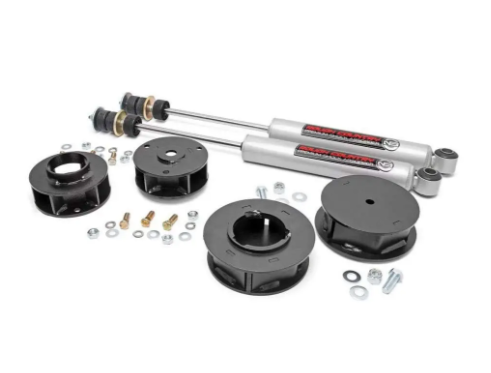
A leveling kit is the subdued option: it brings the front of your SUV up to match the rear, eliminating the factory rake and making room for slightly larger, though never oversized, tires. It's a subtle change that still tightens up your stance, works in off-road situations, and asks far less of your vehicle and your wallet.
A lift kit cranks your vehicle up across the board, back to front and everything in between. Lifts include more components, new control arms, struts, and spacers depending on how high you're going, and they unlock much larger tires, better ground clearance, and a far more noticeable road presence. The trade: higher price and a more complex install. The full comparison lives in our lift kit vs leveling kit guide.
Considerations Before Lifting Your SUV
Lifting your SUV is about so much more than a fresh look; any suspension upgrade changes the way the vehicle drives. On a daily driver, expect changes in ride quality and fuel economy, and yes, you might have to think about parking-garage clearance downtown. On a weekend trail rig, the size question relaxes, and factors like steering angles, shock travel, and articulation take its place. Safety and legality deserve a look too; our lift safety and law guide covers the height limits that vary state by state.
Then there's fitment. 35s look hella tough on your ride, and the tires scrubbing every time you pull into the driveway is how you learn the choice was wrong. Lift height, wheel offset, and tire size all have to work in harmony; get one wrong and you're trimming fenders or replacing prematurely worn components mid-build. And we can't talk considerations without the almighty dollar: budget for the kit, labor if you're not wrenching yourself, a proper alignment, and the surprise upgrades that reveal themselves mid-install. Lifting an SUV can snowball in cost fast if you aren't prepared, which is why the modest-height route keeps winning converts.
Trusted Lift and Leveling Kit Brands for SUVs
Once you know what kind of upgrade you want, the brand choice is the biggest one left. Here's the field, honestly sorted.
Rough Country
There's a reason Rough Country is such a popular choice: quality suspension covering pretty much every vehicle under the sun at a price that keeps your budget happy. Reliable, easy to install, and generous with the clearance that lets you go nuts on wheel and tire sizes. Shop Rough Country.
ReadyLIFT
More refinement than the budget tier without the premium plunge. ReadyLIFT kits mimic stock ride quality remarkably well while still delivering the aggressive stance, the perfect choice for daily-driver builds that put comfort first, and no slouch when the pavement ends. Shop ReadyLIFT.
BDS Suspension
When you want unrivaled strength, BDS is the obvious choice: heavy-duty control arms, premium coilover and shock upgrades by application, and the ultimate peace of mind in their No Fine Print warranty: break it and BDS replaces it, no questions asked. Their Factory Protection Plus program even backs your drivetrain warranty concerns on eligible new vehicles. This is the setup a rugged overland build deserves. Shop BDS.
Zone Offroad
Rounding out the lineup, a no-BS brand ideal for mild-to-mid builds. As a sister brand to BDS, Zone shares much of the same engineering, minus some of the sizzle, making it the dependable, rugged, no-brainer choice for budget-conscious drivers who want capability over penny-pinching. Our Zone brand review has the full story. Shop Zone Offroad.
| Brand | Tier | Best For |
|---|---|---|
| Rough Country | Budget | Maximum coverage, easy installs |
| Zone Offroad | Budget-plus | BDS engineering at value pricing |
| ReadyLIFT | Mid | Daily drivers that prize stock-like ride |
| BDS | Premium | Overland and hard-use builds, No Fine Print warranty |
Shop All Suspension Options for Your SUV at SD Wheel
We've given you the know-how, so now it's time to find the right setup for your particular SUV and driving needs. Whether you're crushing rocks and roots or just making the commute feel cushier, every purchase ships free with quick delivery, financing keeps the budget breathing, and when you complete the look with wheels and tires, the bundle arrives mounted and balanced free from our Wrightstown, Wisconsin warehouse with the Perfect Drive 30-day fitment guarantee. Throw on your new setup and you're ready to go.
Frequently Asked Questions
Should I lift my daily-driven SUV?
If the look or light trail use is the goal, a leveling kit or 2-inch lift gives you most of the payoff with the smallest tax on ride, economy, and components. Save the big lifts for rigs with a job that demands them.
Does lifting my SUV void the warranty?
Under the Magnuson-Moss Warranty Act, a dealer must show the modification caused a failure to deny a related claim; a lift doesn't void your warranty wholesale. BDS goes further with Factory Protection Plus coverage on eligible vehicles, and our lift safety guide covers the details.
How much does it cost to lift an SUV?
Leveling kits sit at the budget end, full lifts in the mid range, and coilover setups at the premium end, plus install labor, an alignment, and usually tires. The kit is often the smallest line item, so budget the whole project, never just the box.
Will a lift hurt my fuel economy?
Some, yes: added height means added drag, and bigger tires add rolling resistance. A level with modest tires costs little; a tall lift on 35s is a noticeable line on the fuel budget. Decide with eyes open.
Can my crossover be lifted at all?
Almost certainly; unibody crossovers take spacer and coilover kits up to about 2.5 inches, while body-on-frame SUVs get the full menu. The mechanics live in our Can You Lift an SUV guide, this page's sibling.
Updated April 2026. Current kit stock and pricing live in the suspension store links.